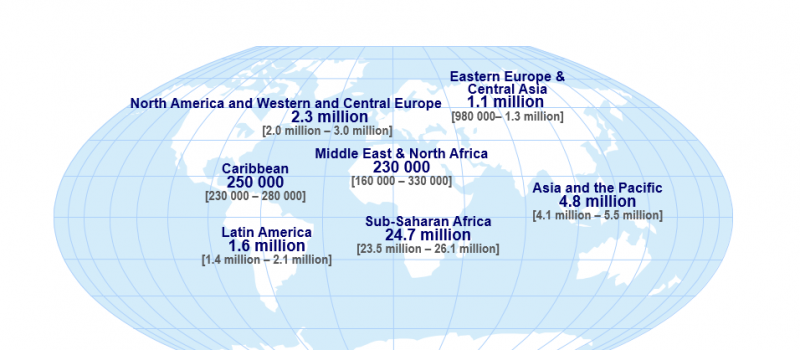
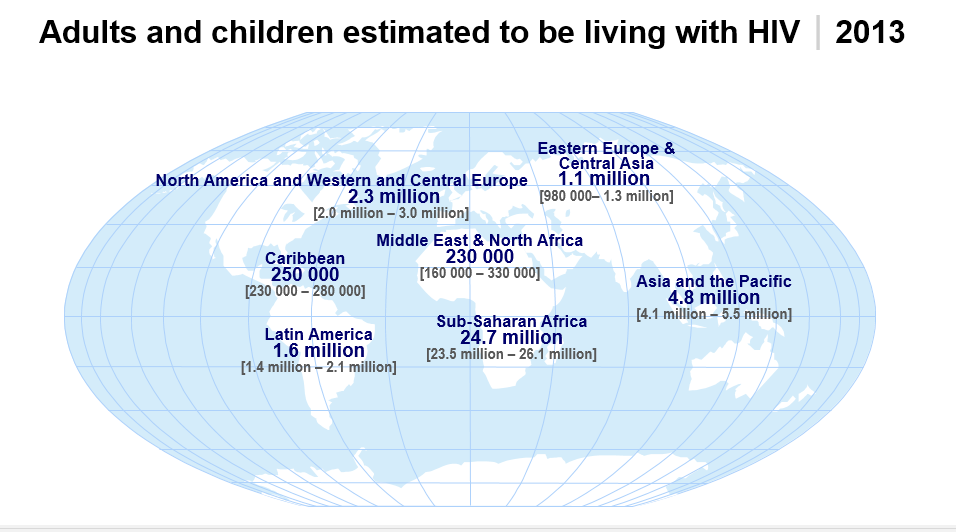
ISR’s initial focus is on the HIV market. HIV disease continues to be a serious health issue for parts of the world. Worldwide, there were about 1.4-2.3 million new cases of HIV in 2018 (the latest data available). About 32.7-44.0 million people are living with HIV around the world and around 20.5-24.3 million have access to antiretroviral therapy. In 2018, there were about 570 000-1.1 million deaths in persons with AIDS, and nearly 40 million people with AIDS have died worldwide since the epidemic began (www.unaids.org) . Since 2010, however, new HIV infections have declined by an estimated 16%, from 2.1 million [1.6 million–2.7 million] to 1.7 million [1.4 million–2.3 million] in 2018. Even though sub-Saharan Africa bears the biggest burden of HIV/AIDS, countries in South and Southeast Asia, Eastern Europe and Central Asia, and those in Latin America are significantly affected by HIV and AIDS. A cure for HIV doesn’t yet exist, but treatments are available to extend the lives of those with HIV and help stop transmission of the virus. Many of the highly active antiretroviral therapies available today work effectively to slow the progression of disease caused by HIV. The lack of a definitive cure is a pressing health problem and results in a high on-going cost to society. For example, in the United States, HIV/AIDS costs the society an estimated $35-40 billion on an annual basis (www.cdc.gov) .
The Asian, African and South American regions are developing markets currently contributing less than 20% share in the global HIV market. The recent growth of the market in Asia Pacific is however a positive sign for potential manufacturers, with the rest of the world following a similar pattern. Furthermore, the potential for market growth in these regions is substantial due to their population sizes and issues with current treatments. The unavailability of affordable drugs is often the reason these markets have not been proliferated. Furthermore, the leading cause of death in Asia and South America is their poor healthcare standards which make patient compliance and patient care with current treatments difficult. In addition to pharmaceuticals, current treatments of HIV patients also involve dietary modifications and symptomatic relief of conditions presented during the onset of AIDS. Therapeutic treatment is often costly and requires constant supply of energy compounds (sugar/fat) for the patient to maintain a standard daily requirement. The affordability of such treatments is a factor of concern in many developing countries of the world. Furthermore, the highest number of HIV-infected people is witnessed in poor countries.
The global HIV drugs market exceeded a value of US$ 24.7 Billion in 2018 and the combined sales value of HIV drugs is expected to increase in the next decade. Looking forward, the market value is projected to reach US$ 22.5 Billion by 2024, declining at a CAGR of 2.5% during 2019-2024, reflecting both an increasing generic market and a decline in the number of new HIV infections. The global patient population for HIV is expected to increase to around 40 million in 2022. Out of the major EU markets, the UK will remain largest by patient number over the next decade, with the EU total market patient population estimated to be over 0.5 million by 2022. The projected annual growth rate for the UK is 6.2%, the fastest of all the major markets. Region-wise, North America exhibits a clear dominance in the market. Other major regions include Europe, Asia Pacific, Middle East and Africa, and Latin America (www.marketwatch.com) .
The gold standard for the millions already infected with HIV is antiretroviral drugs targeting virus replication, integration and release.
No current treatments exploit the immune system´s potential to treat an established HIV/AIDS infection. ISR´s novel method introduces three key opportunities:
About 1% of persons living with HBV infection (2.7 million people) are also infected with HIV. Conversely, the global prevalence of HBV infection in HIV-infected persons is 7.4%. Since 2015, WHO has recommended treatment for everyone diagnosed with HIV infection, regardless of the stage of disease. Tenofovir, which is included in the treatment combinations recommended in first intention against HIV infection, is also active against HBV.